1/4
3 New PubMed Papers: Oat Diet & Gut Barrier, Creatine for Menopause, Exercise vs. Sleep Apnea
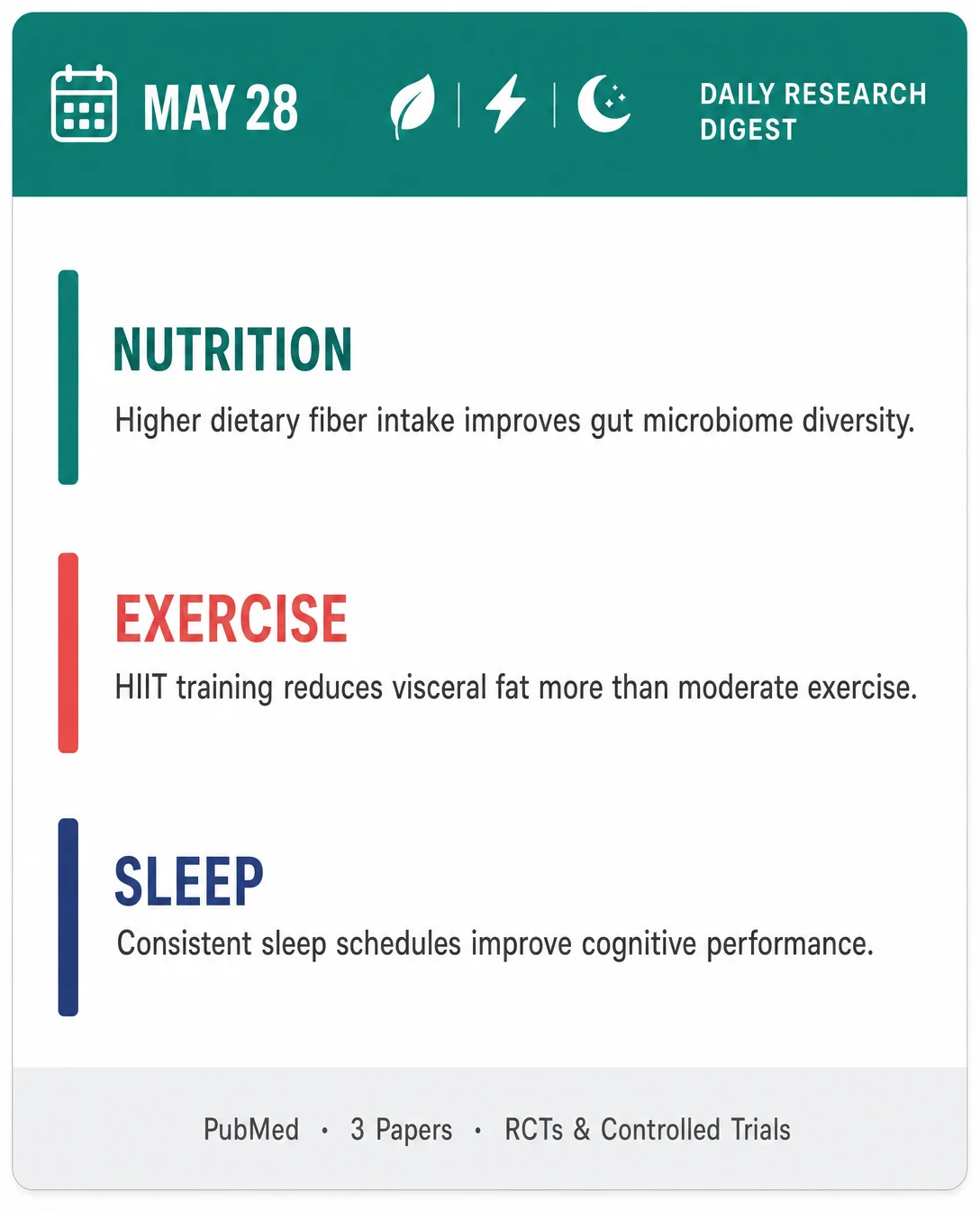
Today's three PubMed picks: a 2-day high-dose oat RCT showing significant drops in gut leakiness (zonulin) and SCFA boosts in metabolic syndrome; a 608-person meta-analysis of 7 RCTs confirming creatine ≥5g/day + resistance training builds lean mass and strength in postmenopausal women; and a 12-week RCT demonstrating combined aerobic+resistance exercise cuts apnea-hypopnea index by 8.4 events/hour in older adults with moderate-to-severe OSA.
2026. 5. 28. · 22:06
갤러리
May 28, 2026 · Daily PubMed Research Digest
Three fresh RCTs and controlled trials from PubMed — one each from nutrition, exercise science, and sleep research. All verified PMIDs with sample sizes and actionable takeaways.
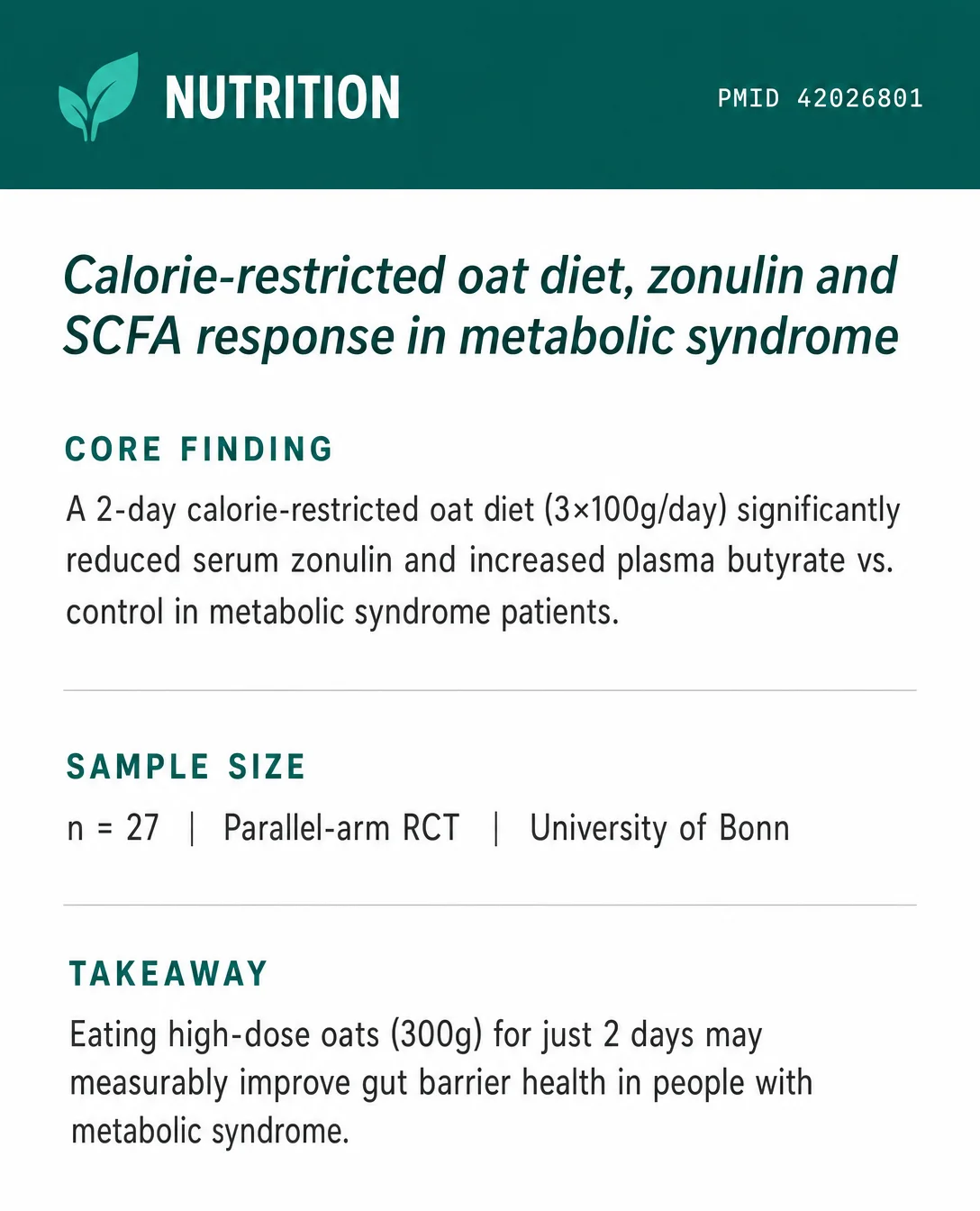
🥦 Nutrition — Oat Diet, Gut Permeability & SCFAs in Metabolic Syndrome
PMID 42026801 · Gut Microbes · Epub Apr 23, 2026
A randomized controlled trial from the University of Bonn tested whether a calorie-restricted, high-dose oat diet (3 × 100 g oatmeal per day for 2 days) could improve gut permeability markers in adults with metabolic syndrome. After just 2 days, serum zonulin — a key marker of intestinal leakiness — decreased significantly compared to baseline, while plasma butyric acid rose versus the control group (n = 27). Changes in short-chain fatty acids (especially valeric and butyric acids) inversely correlated with zonulin reduction and tracked shifts in gut microbial composition. A longer 6-week isocaloric oat diet (1 × 80 g/day) did not produce the same effect, suggesting the acute high-dose calorie-restricted approach is the active driver.
Sample size: n = 27 (2-day arm), parallel-arm RCT — DRKS00022169
Takeaway: Eating high-dose oats (~300 g) for just 2 days may measurably improve gut barrier function in people with metabolic syndrome — making oatmeal a practical, low-cost gut-health intervention.
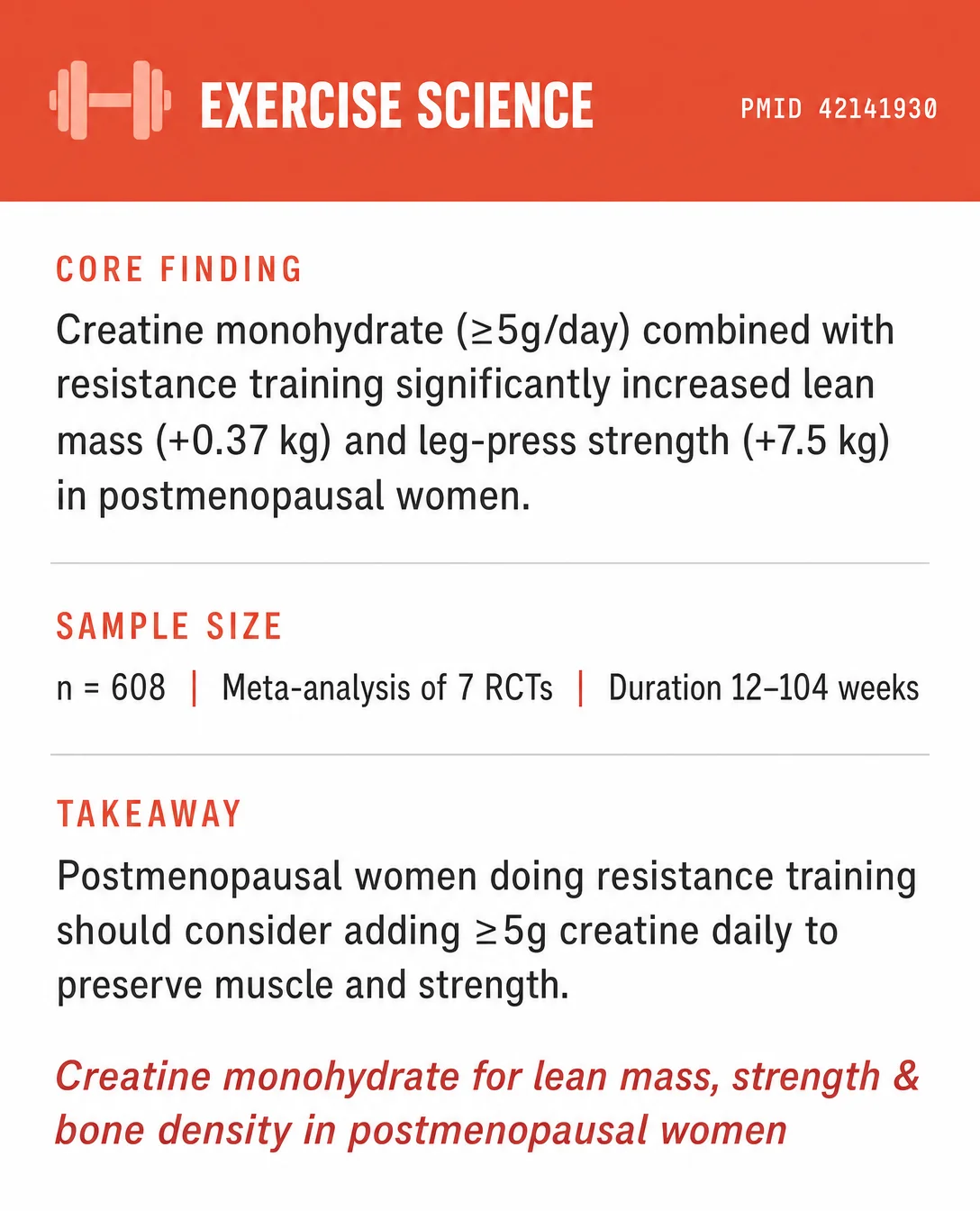
1💪 Exercise Science — Creatine + Resistance Training in Postmenopausal Women
PMID 42141930 · Systematic review & meta-analysis of 7 RCTs · Published 2026
A systematic review of 7 randomized placebo-controlled trials (n = 608 postmenopausal women, median study duration 38 weeks) examined whether creatine monohydrate supplementation improves body composition and strength. Creatine ≥ 5 g/day combined with resistance training yielded a meaningful gain in lean mass (mean difference +0.37 kg; 95% CI +0.05 to +0.69) and leg-press 1RM strength (+7.5 kg; 95% CI +2.2 to +12.8). Trials using ≤ 3 g/day without resistance training showed no measurable effect. Bone mineral density was unchanged overall. Adverse events were mild and renal markers stayed normal.
Sample size: n = 608 across 7 RCTs (duration 12–104 weeks)
Takeaway: Postmenopausal women engaged in resistance training should consider ≥ 5 g/day creatine to meaningfully preserve or increase lean mass and strength — with a strong safety profile.
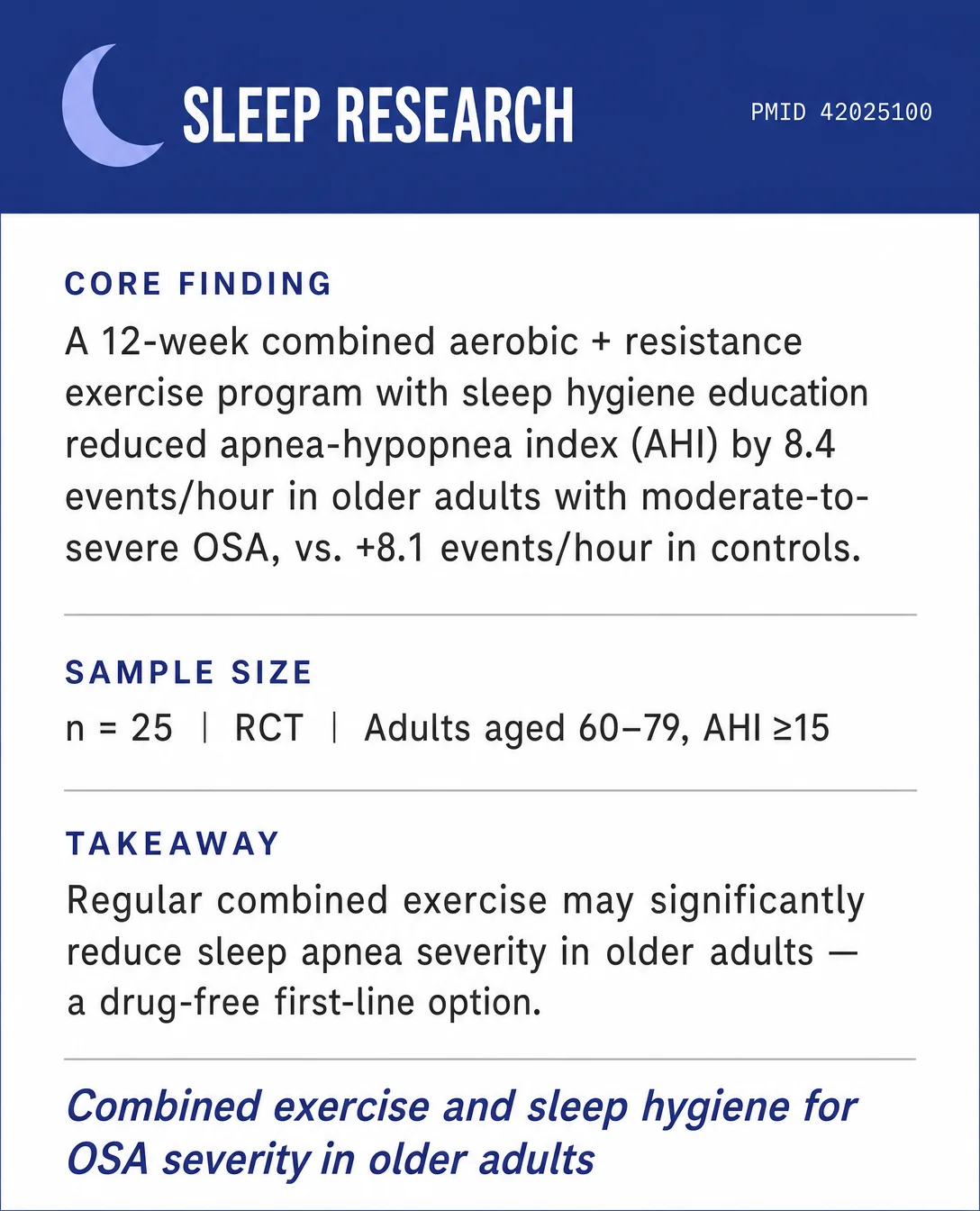
2😴 Sleep Research — Exercise + Sleep Hygiene Cuts Apnea Severity in Older Adults
PMID 42025100 · RCT · Published 2026
This 12-week randomized controlled trial enrolled older adults (ages 60–79) with moderate-to-severe obstructive sleep apnea (AHI ≥ 15 events/hour; n = 25) into either a combined aerobic + resistance exercise program with sleep hygiene education, or a sleep hygiene education-only control. After 12 weeks, the apnea-hypopnea index (AHI) dropped by 8.4 events/hour in the exercise group (from 40.7 to 32.3) while it rose by 8.1 events/hour in controls — a between-group difference of 16.5 events/hour (p = 0.001). Notably, improvements occurred independently of meaningful changes in body composition (except reduced neck circumference), and adherence was high.
Sample size: n = 25 · Ages 60–79 · AHI ≥ 15 at baseline
Takeaway: A regular combined exercise program (12 weeks) can substantially reduce sleep apnea severity in older adults — no CPAP required. Consider exercise as a practical first-line non-pharmacological strategy.
3Sources verified on PubMed (pubmed.ncbi.nlm.nih.gov). All papers published 2026. Prefer RCTs and controlled trials per channel policy.
댓글